เทรนด์สิ่งพิมพ์รักษ์โลก 2027 โอกาสทองของ SME ไทย
ปี 2027 สิ่งพิมพ์รักษ์โลกคือมาตรฐานใหม่! SME ไทยคว้าโอกาสทอง สร้างความต่าง เพิ่มมูลค่าสินค้า ตอบโจทย์ลูกค้าใส่ใจสิ่งแวดล้อม ด้วยวัสดุยั่งยืน หมึกปลอดภัย และเทคโนโลยีพิมพ์ดิจิทัล ยกระดับแบรนด์คุณเลย!


ปี 2027 สิ่งพิมพ์รักษ์โลกคือมาตรฐานใหม่! SME ไทยคว้าโอกาสทอง สร้างความต่าง เพิ่มมูลค่าสินค้า ตอบโจทย์ลูกค้าใส่ใจสิ่งแวดล้อม ด้วยวัสดุยั่งยืน หมึกปลอดภัย และเทคโนโลยีพิมพ์ดิจิทัล ยกระดับแบรนด์คุณเลย!

“`python
# 1. List Comprehension for concise list creation/transformation
# Create a list of squares for numbers 0 to 4
squares = [x**2 for x in range(5)]
print(f”Squares: {squares}”) # Output: Squares: [0, 1, 4, 9, 16]
# Filter even numbers from an existing list
numbers = [1, 2, 3, 4, 5, 6]
even_numbers = [num for num in numbers if num % 2 == 0]
print(f”Even numbers: {even_numbers}”) # Output: Even numbers: [2, 4, 6]
# 2. Dictionary Comprehension for concise dictionary creation/transformation
# Create a dictionary mapping numbers to their squares
square_dict = {x: x**2 for x in range(3)}
print(f”Square dictionary: {square_dict}”) # Output: Square dictionary: {0: 0, 1: 1, 2: 4}
# 3. F-Strings for easy string formatting (Python 3.6+)
name = “Alice”
age = 30
message = f”Hello, {name}! You are {age} years old.”
print(message) # Output: Hello, Alice! You are 30 years old.
# Include expressions directly
result = f”The sum of 5 and 3 is {5 + 3}.”
print(result) # Output: The sum of 5 and 3 is 8.
# 4. Enumerate for iterating with index
# Iterate over a list and get both index and value
fruits = [“apple”, “banana”, “cherry”]
for index, fruit in enumerate(fruits):
print(f”{index}: {fruit}”)
# Output:
# 0: apple
# 1: banana
# 2: cherry
# 5. Zip for combining multiple iterables
# Combine two lists element-wise
names = [“Alice”, “Bob”]
scores = [95, 88]
for name, score in zip(names, scores):
print(f”{name} scored {score}”)
# Output:
# Alice scored 95
# Bob scored 88
# 6. Default Dictionary for handling missing keys gracefully
from collections import defaultdict
# Count occurrences of elements in a list
data = [‘a’, ‘b’, ‘a’, ‘c’, ‘b’, ‘a’]
counts = defaultdict(int) # Default value for missing keys is 0
for item in data:
counts[item] += 1
print(f”Counts: {dict(counts)}”) # Output: Counts: {‘a’: 3, ‘b’: 2, ‘c’: 1}
# 7. Context Managers (with statement) for resource management
# Automatically close files or release resources
file_path = “example.txt”
with open(file_path, “w”) as f:
f.write(“Hello, world!\n”)
f.write(“Python is great.”)
# File is automatically closed after exiting the ‘with’ block
with open(file_path, “r”) as f:
content = f.read()
print(f”File content:\n{content}”)
# Output:
# File content:
# Hello, world!
# Python is great.
# 8. Function Arguments: *args and **kwargs
# *args for arbitrary number of positional arguments
def sum_all(*args):
total = 0
for num in args:
total += num
return total
print(f”Sum of 1, 2, 3: {sum_all(1, 2, 3)}”) # Output: Sum of 1, 2, 3: 6
# **kwargs for arbitrary number of keyword arguments
def print_info(**kwargs):
for key, value in kwargs.items():
print(f”{key}: {value}”)
print_info(name=”Charlie”, age=25, city=”New York”)
# Output:
# name: Charlie
# age: 25
# city: New York
# 9. Decorators for modifying functions/methods
# A simple decorator to log function calls
def logger(func):
def wrapper(*args, **kwargs):
print(f”Calling function {func.__name__} with args: {args}, kwargs: {kwargs}”)
result = func(*args, **kwargs)
print(f”Function {func.__name__} returned: {result}”)
return result
return wrapper
@logger
def add(a, b):
return a + b
add(10, 20)
# Output:
# Calling function add with args: (10, 20), kwargs: {}
# Function add returned: 30
# 10. `requests` library for HTTP requests
import requests
try:
response = requests.get(“https://jsonplaceholder.typicode.com/todos/1″)
response.raise_for_status() # Raises HTTPError for bad responses (4xx or 5xx)
todo = response.json() # Parse JSON response
print(f”\nFetched TODO item: {todo}”)
print(f”Title: {todo[‘title’]}”)
except requests.exceptions.RequestException as e:
print(f”Error fetching data: {e}”)
# Output (example):
# Fetched TODO item: {‘userId’: 1, ‘id’: 1, ‘title’: ‘delectus aut autem’, ‘completed’: False}
# Title: delectus aut autem
“`

ฉลากปี 2027 พลิกบทบาทสู่สื่อโต้ตอบ! อัปเดตเทรนด์สิ่งพิมพ์ด้วยฉลากอัจฉริยะ ทั้ง QR, NFC, และ AR ที่ผสานความยั่งยืนและการปรับเฉพาะบุคคล เพื่อสร้างประสบการณ์ไม่เหมือนใคร ดึงดูดและมัดใจลูกค้ายุคใหม่. ค้นพบวิธีสร้างความแตกต่างให้แบรนด์คุณวันนี้!

พลิกโฉมธุรกิจ SME! อนาคตของฉลากสินค้าปี 2027 เน้นนวัตกรรมยั่งยืน รีไซเคิลได้ การพิมพ์ดิจิทัล และ Smart Label ช่วยลดต้นทุน สร้างแบรนด์น่าเชื่อถือ ดึงดูดผู้บริโภคใส่ใจสิ่งแวดล้อม ไม่ตกเทรนด์ฉลากรักษ์โลก เตรียมตัวให้พร้อมวันนี้!

คว้าโอกาสทอง! เทรนด์บรรจุภัณฑ์รักษ์โลก 2027 ไม่ใช่แค่ภาพลักษณ์ แต่คือมาตรฐานใหม่ของ SME สร้างความแตกต่าง เพิ่มมูลค่า เจาะตลาดใหม่ เตรียมพร้อมรับมือกับการแข่งขันแห่งอนาคตได้แล้ววันนี้

เทรนด์ AI ออกแบบแพคเกจจิ้งปี 2027 มาแรง! แต่จะพิมพ์ให้ “ตรงปก” ไม่ใช่แค่สวยบนจอทำอย่างไร? เรียนรู้วิธีใช้ AI สร้างงานออกแบบพร้อมเทคนิคควบคุมคุณภาพการผลิตจริง ให้แพคเกจจิ้งของคุณสมบูรณ์แบบไม่ผิดเพี้ยน อ่านเลย!

เตรียมพร้อมรับมือ! ปี 2027 ฉลากสินค้า SME ต้องมากกว่าความสวยงาม แต่เน้นยั่งยืน ดิจิทัล สร้างความน่าเชื่อถือ และประสบการณ์แบรนด์. เจาะลึก 8 เทรนด์สำคัญ พร้อมกลยุทธ์นำไปใช้จริง เพื่อพลิกโฉมสินค้าคุณให้โดดเด่นและเติบโตอย่างยั่งยืน.

อยากมัดใจ Gen Z? ฉลากสินค้า 2027 ต้องมากกว่าความสวยงาม! ค้นพบเทรนด์ดีไซน์รักษ์โลก วัสดุรีไซเคิล ความโปร่งใส และ Smart Label ที่จะช่วยสื่อสารเรื่องราวแบรนด์คุณอย่างพิสูจน์ได้ เตรียมธุรกิจคุณให้พร้อมสำหรับอนาคตที่ยั่งยืนวันนี้!

เตรียมพร้อมสำหรับอนาคตสื่อสิ่งพิมพ์! เจาะลึกทิศทางปี 2027 ที่เน้นนวัตกรรมรักษ์โลก การผลิตลดของเสีย และการผสานสิ่งพิมพ์เข้ากับดิจิทัลอย่างชาญฉลาด ทำความเข้าใจผลกระทบต่อธุรกิจ SME พร้อมกลยุทธ์ปรับตัวสู่การเติบโตอย่างยั่งยืน วางแผนธุรกิจคุณให้ก้าวนำเทรนด์.
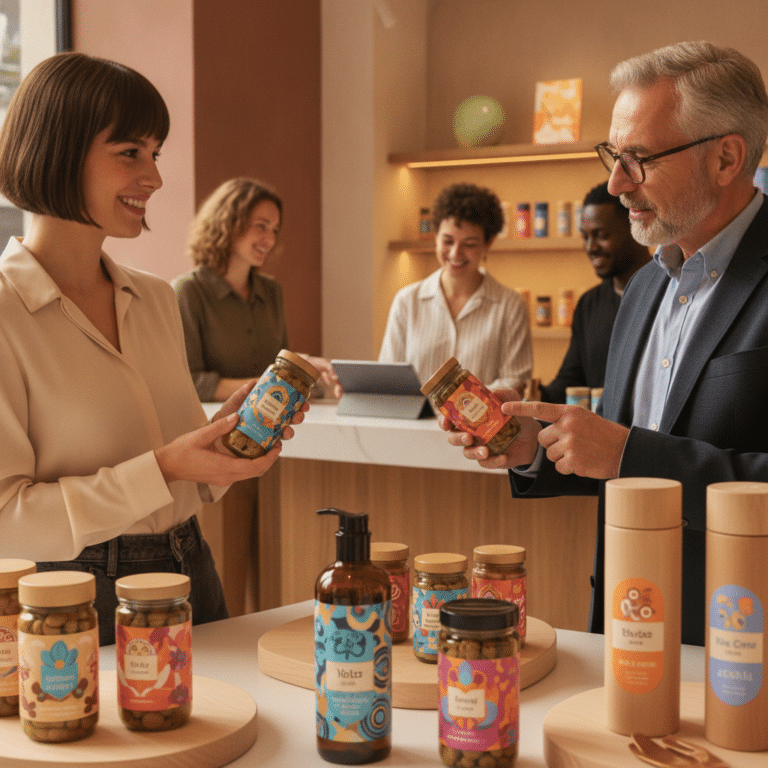
ปลดล็อกพลังการตลาดใหม่! เทรนด์แพคเกจจิ้ง 2027 เน้นฉลากเฉพาะบุคคลด้วย VDP สร้างประสบการณ์เหนือระดับ ดึงดูดลูกค้า และเพิ่มยอดขายอย่างก้าวกระโดดสำหรับทุกธุรกิจ โดยเฉพาะ SME มาอัปเดตกลยุทธ์ให้แบรนด์คุณโดดเด่นก่อนใคร!